


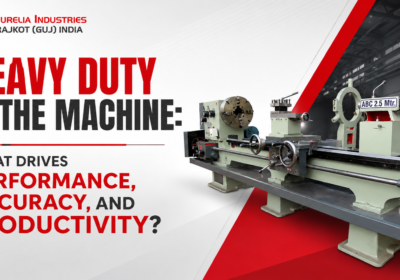
Heavy Duty Lathe Machine: What Drives Performance, Accuracy, and Productivity?

Quick Summary: A heavy duty lathe machine performance comes down to a handful of engineering fundamentals- bed rigidity, spindle design, drive systems, and precision components that don’t always show up clearly on a spec sheet. This article breaks down what actually drives accuracy and productivity on these machines, so buyers and operators can look past headline numbers and understand what genuinely separates a capable machine from an underperforming one.
Table Of Content
- H2: Introduction
- H2: Bed Rigidity: The Foundation Everything Else Depends On
- H2: Spindle Design and Bearing Quality
- H2: Drive System and Power Transmission
- H2: Precision Components That Determine Accuracy
- H2: Productivity Factors Beyond Raw Cutting Speed
- H2: Common Mistakes When Evaluating a Heavy Duty Lathe Machine
- H2: Conclusion
- H2: FAQs
H2: Introduction
A heavy duty lathe machine has one work: remove material from a rotating workpiece with enough precision and power to handle large, demanding parts without losing accuracy over long production runs. Unlike lighter lathes built for smaller, more delicate work, heavy-duty models are engineered around rigidity and load capacity first, since the point is holding tight tolerances while cutting through thick steel, large-diameter shafts, or dense forgings.
What separates a high-performing heavy-duty lathe from one that just looks the part isn’t always from a catalog listing. Bed construction, spindle bearing quality, drive system design, and how well the machine’s components work together under sustained load all matter in ways a simple horsepower rating doesn’t capture. This article gets into what drives performance, accuracy, and productivity on these machines, and what that means for a shop trying to evaluate one.
H2: Bed Rigidity: The Foundation Everything Else Depends On
Before anything else about a heavy duty lathe machine’s capability matters, the bed it’s built on determines whether the rest of the machine can perform as designed.
- A heavier, more rigid bed absorbs cutting vibration far better than a lighter frame, and vibration is one of the biggest reasons heavy cuts end up with poor surface finish or dimensional drift.
- Wide, well-supported ways keep the carriage and tailstock stable under heavy cutting forces, which stops the kind of deflection that quietly throws off precision on large-diameter work.
- Proper bed material and casting quality affect long-term stability, since a poorly stress-relieved casting can warp slightly over years of use, gradually wrecking accuracy in ways that are genuinely hard to diagnose.
A heavy duty lathe machine with impressive spindle specs but a weak bed still underperforms on heavy cuts, since the bed is really the structural foundation everything else- spindle, carriage, tailstock- depends on to stay accurate.
H2: Spindle Design and Bearing Quality
The spindle is where raw cutting power meets the workpiece, and its design affects both accuracy and how well the machine holds up over years of heavy use.
Spindle bearing quality directly determines runout, that tiny wobble in the spindle’s rotation that turns into inconsistent diameters and poor surface finish on finished parts. High-quality bearings, properly preloaded and maintained, keep runout minimal even under heavy load, while lower-grade bearings wear out faster and introduce accuracy problems that keep getting worse across the heavy duty lathe machine’s service life.
Spindle bore size and speed range matter a lot for practical productivity too. A larger spindle bore handles thicker bar stock without needing a secondary setup, while a wide, well-controlled speed range lets an operator match cutting speed to different materials and diameters, instead of settling for one fixed setting that’s never quite right for the work.
H2: Drive System and Power Transmission
How power gets from the motor to the spindle affects both how consistently a lathe cuts and how much torque is available at different speeds.
- Gear-driven systems typically offer strong torque at lower speeds, which matters a lot for heavy roughing cuts on large-diameter material.
- Variable frequency drives (VFDs) give smoother speed control and often better energy efficiency, though the torque behaves differently than a traditional gear-driven setup.
- Belt-driven systems can dampen vibration well, but belt wear over time brings its own maintenance concerns that gear systems handle differently.
The right drive system for a heavy duty lathe machine depends on what a shop is cutting most often, since a setup optimized for high-speed finishing work performs quite differently from one optimized for heavy, low-speed roughing on large forgings.
H2: Precision Components That Determine Accuracy
Beyond the major structural elements, a handful of smaller components have an outsized effect on a lathe’s working accuracy. These are as follows:
- Ball screws or lead screws control precise carriage movement, and backlash in a worn or lower-quality screw translates directly into dimensional inconsistency on finished parts.
- Linear guides or box ways support carriage movement, and each style comes with different tradeoffs between rigidity, wear resistance, and long-term maintenance needs.
- The tailstock’s alignment and rigidity matter a great deal for long workpiece support, since a tailstock that isn’t perfectly aligned introduces taper error across the length of a long shaft.
- Toolpost design and rigidity affect how well cutting forces get absorbed during heavy cuts, and a flexing or poorly supported toolpost directly contributes to chatter and poor surface finish.
None of these components work in isolation. A heavy-duty lathe machine can have an excellent spindle and still underperform if the ball screw has developed backlash, or if the tailstock has drifted out of alignment over years of use.
H2: Productivity Factors Beyond Raw Cutting Speed
Speed alone doesn’t decide how productive a heavy duty lathe machine is in daily shop use. A few other things shape throughput just as much, and most shops don’t think about them until they’re already dealing with the consequences. The following are the factors:
- Quick-change tooling systems save time between operations. This matters a lot more in shops running varied part types than in ones doing long single-part production runs, where the tooling stays put for hours anyway.
- Coolant delivery that actually reaches the cutting zone extends tool life. When coolant hits where it’s supposed to, operators can push more aggressive cutting parameters without worrying about the workpiece or tool overheating.
- Control system responsiveness matters a lot on CNC-equipped lathes. A responsive system lets an operator program and adjust operations, instead of losing time between setups fighting with a sluggish interface.
At the end of the day, a shop that judges productivity purely on spindle horsepower or maximum RPM tends to miss these practical details, and they’re often the ones that move the needle on daily output.
H2: Common Mistakes When Evaluating a Heavy Duty Lathe Machine
A handful of mistakes keep showing up when buyers evaluate these heavy-duty lathe machines, and most of them are avoidable with just a bit more attention before signing off on a purchase. Some of the mistakes are as follows: Choosing the right Extra Heavy Duty Lathe also depends on your machining requirements and workload.
- Chasing horsepower or swing capacity numbers without checking bed rigidity or spindle bearing quality. It’s an easy trap to fall into, since those numbers are simple to compare side by side, but a machine that looks powerful on paper can still vibrate badly or drift out of accuracy the moment it hits heavy cutting work.
- Overlooking tailstock alignment, especially in shops that don’t regularly work with long shaft-type parts and never think to ask about it upfront. Then the day they do take on that kind of work, taper error shows up out of nowhere, and nobody can quite figure out why, because all the attention went to the spindle and drive system instead.
- Ignoring the productivity side entirely. Buyers get locked into comparing raw cutting speed or RPM and skip right past things like how fast tooling can actually be changed over, or whether the coolant system genuinely reaches where it needs to.
None of these mistakes show up on day one. They tend to surface weeks or months in, once the machine’s actually being pushed through production work, which is exactly why it pays to ask the right questions before the purchase, not after.
H2: Conclusion
A heavy duty lathe machine’s performance comes down to how well its fundamental engineering, bed rigidity, spindle quality, drive system, and precision components work together under sustained, heavy load, not just what’s printed on a spec sheet. Understanding these factors helps buyers evaluate machines based on what drives accuracy and productivity, rather than headline numbers alone. At Surelia Industries, that engineering-first approach shapes every heavy-duty lathe we build, helping manufacturers get equipment that performs reliably where it counts, on the shop floor, under high production demands.
H2: FAQs
What’s the most important factor in a heavy-duty lathe machine’s accuracy?
Bed rigidity and spindle bearing quality both play foundational roles, since a weak bed or degraded spindle bearings introduce vibration and runout that no other component can fully compensate for.
How does spindle bore size affect practical productivity?
A larger spindle bore allows thicker bar stock to pass through without requiring secondary setups or workarounds, which can meaningfully reduce setup time for shops regularly working with larger diameter material.
Why does tailstock alignment matter so much for long workpieces?
A misaligned tailstock introduces taper error across the length of a shaft, since even a small deviation compounds significantly over a longer workpiece, directly affecting dimensional accuracy.
Are gear-driven or VFD-controlled lathes better for heavy cutting?
It depends on the application; gear-driven systems typically offer stronger low-speed torque for heavy roughing cuts, while VFD systems provide smoother speed control, so the right choice depends on what a shop cuts most often.
How often should ball screws and bearings be inspected on a heavy-duty lathe?
This varies by usage intensity, but regular inspection helps catch developing backlash or bearing wear early, before it noticeably affects dimensional accuracy on finished parts.


No Comment! Be the first one.